
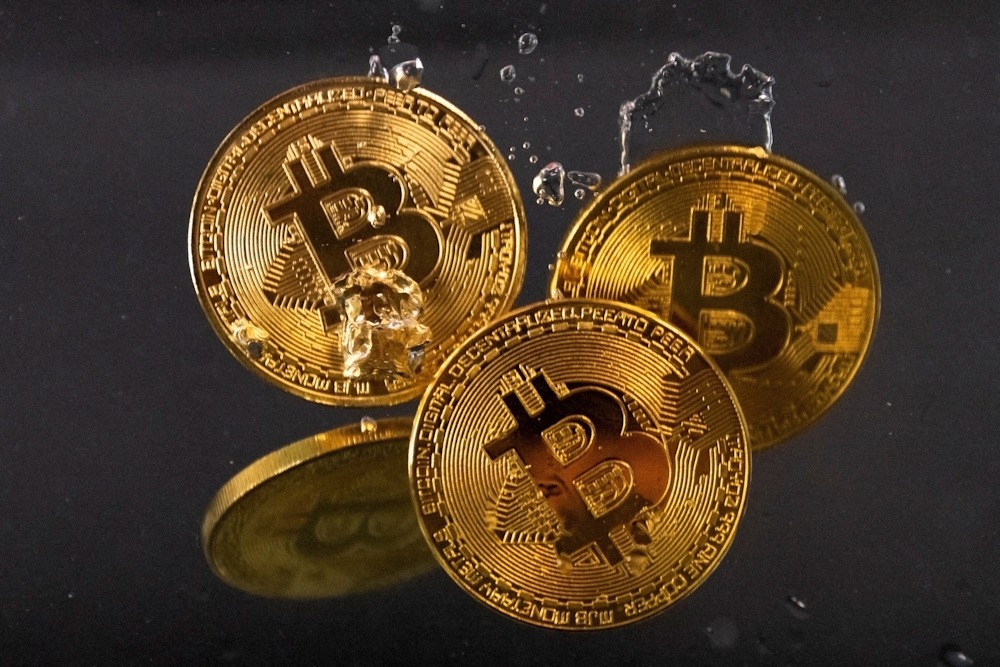
Bitcoin’s price has experienced a further decline, moving in tandem with other assets as the oil price continued to rise and the Federal Reserve issued a hawkish statement. The price of the leading asset recently stood at $81,203 after experiencing a decline to nearly $80,922 at one point on Thursday morning in New York. Over the past day, bitcoin’s price has declined by nearly 3%; over a seven-day period, it has decreased by 4%. Just last week, the coin appeared to be approaching the $90,000 threshold following an impressive rally in September and one of its strongest quarters in recent years.
However, the month of October, often referred to as Uptober due to its historical tendency to yield favourable returns for bitcoin investors, is beginning sluggishly amidst a rising oil price. This week, the price of Brent crude has surged in response to renewed attacks on tankers in the Strait of Hormuz. U.S. President Trump suggested that negotiations with Iran were not progressing as he had hoped. A surging oil price this year has – at least in the short-term – negatively impacted the price of bitcoin and other “risk-on” assets due to the heightened likelihood of the U.S. central bank increasing interest rates. Bitcoin has historically performed favourably in environments characterised by low interest rates, attributed to heightened liquidity.
In a speech on Thursday, Federal Reserve Governor Christopher Waller indicated that additional interest-rate increases will probably be necessary to curb inflation. He did add that there was “flexibility” regarding the pace of increases. Oil prices have surged following the U.S. and Israel’s military actions against Iran in February, which prompted Iran to retaliate by closing the Strait of Hormuz. Rising oil prices have resulted in persistent and increasing prices globally, including in the United States.
However, bitcoin’s price in September seemed to disregard remarks made by the new Federal Reserve Chair, Kevin Warsh, and surged even in the face of the central bank’s interest rate hike. Despite the decline in bitcoin’s price, some analysts suggest that the cryptocurrency has re-entered a bull market. The largest cryptocurrency experienced a prolonged bear market throughout 2026, following its peak in October 2025. It currently stands over 30% beneath its peak of $126,080.