
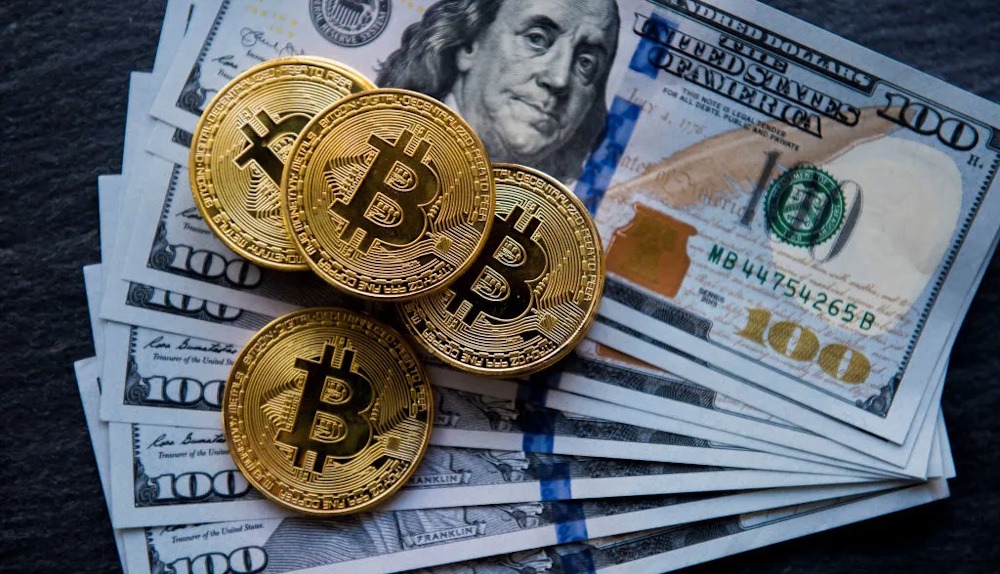
Bitcoin price climbed above $65,000 Monday morning, caught between a sixth straight week of spot ETF outflows, a hawkish Federal Reserve debut, and a U.S.-Iran peace deal that provided a temporary boost to risk assets. The increase occurred as U.S. and Iranian officials indicated advancements in peace negotiations in Switzerland, building upon the memorandum of understanding signed last week that officially concluded over 100 days of conflict. The deal reopened the Strait of Hormuz, a critical passageway for approximately one-fifth of global oil shipments, resulting in crude prices reaching their lowest levels in three months. The initial geopolitical relief propelled the bitcoin price to $66,230 late last week, only for the macroeconomic landscape to reassert its influence thereafter. That reassertion manifested through new Fed Chair Kevin Warsh, whose inaugural FOMC meeting represented a hawkish reset. Warsh expressed a firm dedication to restoring inflation to the 2% target — a position influenced in part by the May CPI registering at 4.2%, significantly exceeding the target. CME FedWatch currently indicates that the likelihood of a rate hike at the July meeting stands at approximately 36%, with market expectations suggesting at least one 25-basis-point increase prior to the end of the year. The U.S. dollar index has rebounded to the 100.6–100.8 range following the Federal Reserve’s tone, a factor that has traditionally exerted significant pressure on the price of bitcoin. In this context, spot bitcoin ETFs in the U.S. experienced a sixth consecutive week of net outflows.
Funds experienced an outflow of $226.8 million in the week ending June 18, according to data, resulting in a cumulative total of $5.94 billion over six weeks — marking the longest consecutive weekly outflow streak on record. U.S. spot ETFs have experienced a significant outflow, totalling a record $6.35 billion over the last 30 days, according to Galaxy Research. The rate of outflows, however, has decelerated. The first week of June observed an outflow of $1.72 billion from the funds; in the subsequent week, that amount decreased to just over $226 million. Analysts observe that funding rates are currently low and leverage has not increased, indicating that spot order books — rather than speculative positioning — are influencing recent price movements. “Investors remain cautious given the shift in the macro regime, while institutional and treasury-style buyers continue to provide the marginal bid,” an analyst noted. “That combination indicates an under-positioned market rather than an overheated one, allowing for potential upside if spot demand strengthens.” Analysts have identified a notable trend in margin data: BTC/USD margin longs have been accumulating within a range of 10–25% from the recent lows, a positioning pattern that has historically signalled medium-term bottoms, as stated in the note.
Corporate buyers exhibited no indications of retreating. Strategy disclosed Monday that it acquired 520 bitcoin last week for approximately $35 million at an average bitcoin price of $67,068, marking its third consecutive weekly purchase. That brings the firm’s total holdings to 847,363 BTC. The company also raised its USD reserve by $300 million to $1.4 billion to support dividend obligations on its preferred stock program. In a notable week for the broader bitcoin treasury space, Strive, Inc. out-bought Strategy for the week. The Dallas-based firm disclosed the acquisition of 759 bitcoin for roughly $50 million at an average price of $65,850 per coin, increasing its total holdings to 19,864 BTC. Strive’s most substantial single-week acquisition in recent months marks a notable increase from the 73 BTC acquired the previous week.
Bitcoin’s options market reveals a more intricate narrative than what the headline price indicates. One-week implied volatility has decreased from 60% to 36%, and the 25-delta put skew has moderated from its June peaks, indicating that the demand for downside protection has diminished. Realised volatility has surpassed implied volatility, with 1-month IV at approximately 39% while realised volatility exceeds 42%. This indicates that recent price fluctuations have exceeded the expectations set by the options markets. A substantial negative gamma cluster is positioned around $62,000, with approximately $1.8 billion in short gamma concentrated in that area. Options traders persist in their willingness to pay a premium for downside protection, as noted by analysts, which sustains elevated levels of volatility premium and 25-delta skew metrics, even following the pullback in June. Bitcoin price is currently approximately 50% lower than its peak of $126,080 reached in October. The upcoming catalysts to monitor include any changes in guidance from Warsh or advancements regarding the CLARITY Act in Congress.