
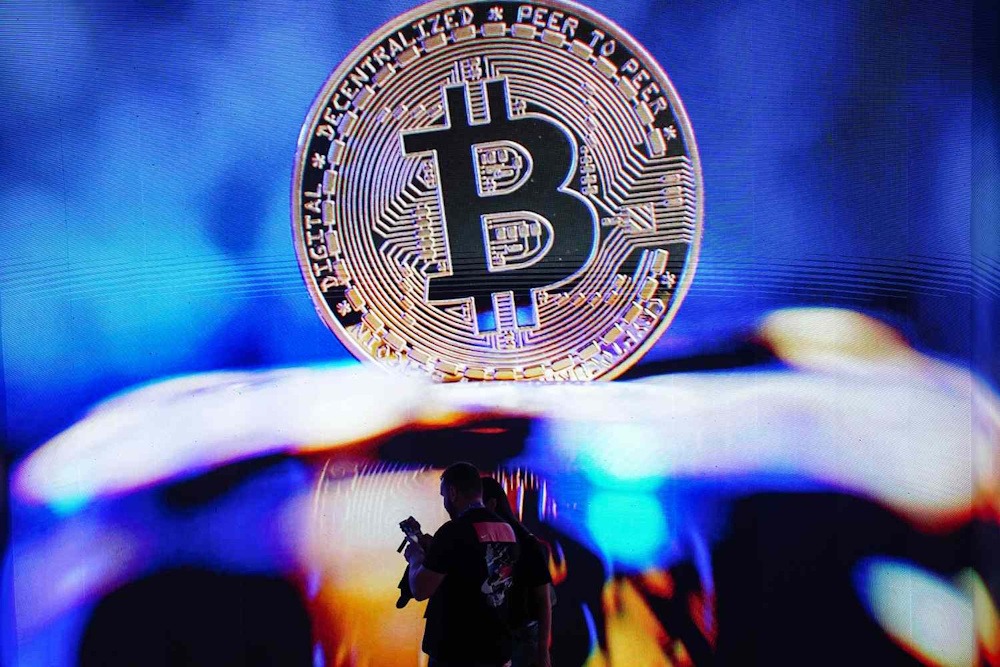
Bitcoin’s significant 46% drop from its October high of approximately $126,100 to around $67,000 has sparked discussions about the factors behind this downturn. Certain market participants have highlighted quantum computing as a potential threat to the cryptographic security of the network. Some analysts contend that the answer is found in the dynamics of capital flows, the tightening of liquidity, and the evolving economics of miners. In a recent episode of the Unchained podcast, Laura Shin hosted Bitcoin developer Matt Corallo, who dismissed the notion that fears surrounding quantum computing are the cause of the current downturn. He stated that if investors were factoring in an imminent quantum risk to Bitcoin’s cryptography, Ether would likely be outperforming instead of declining alongside it. Bitcoin has experienced a decline of approximately 46% from its peak, whereas Ether has seen a drop of about 58% following a market disruption in early October. Corallo contended that this parallel vulnerability undermines the assertion that quantum computing is singularly impacting Bitcoin. He noted that certain holders might be seeking a scapegoat to account for the lackluster price movement.
The quantum debate is heating up as researchers delve into post-quantum cryptography while asset managers revise their disclosures. In a significant move last year, BlackRock updated the registration statement for its iShares Bitcoin ETF, highlighting quantum computing as a potential threat to the integrity of the network. Corallo argued that market pricing does not indicate a sense of urgency. He characterized the present landscape as one where Bitcoin is vying for investment alongside other industries, particularly artificial intelligence. AI infrastructure necessitates expansive data centers, tailored chips, and substantial energy resources. He suggested that the capital intensity has attracted investor attention and funding that could have otherwise been directed towards digital assets. Mining data reveals these contrasting trends. Bitcoin mining difficulty has surged to 144.4 trillion, marking a 15% increase—the largest percentage rise since 2021, a period when China’s mining ban threw the network into disarray before it eventually stabilized. Every 2,016 blocks, roughly every two weeks, the difficulty level adjusts to maintain block production close to a 10-minute average, irrespective of fluctuations in hashrate. The recent uptick comes on the heels of a 12% decrease in mining difficulty, attributed to a reduction in overall computational power.
In October, as bitcoin hovered around $126,500, the hashrate reached a peak of approximately 1.1 zettahash per second. As prices dipped to $60,000 in February, the hashrate decreased to 826 exahash per second. The network has bounced back to approximately 1 zettahash per second as Bitcoin surged to the high-$60,000 range. Despite the recovery, the economics for miners continue to be challenging. Hashprice, which indicates the daily revenue generated per unit of hashrate, currently hovers around multi-year lows at approximately $23.9 per petahash per second. Declining revenues have exerted pressure on margins, especially for operators facing elevated energy expenses. Large-scale miners benefiting from low-cost energy sources have persistently broadened their operations. The United Arab Emirates is estimated to hold approximately $344 million in unrealized profit from its mining operations. Simultaneously, numerous publicly traded mining companies are shifting their energy and computing resources towards AI and high-performance computing data centers. Bitfarms has recently undergone a rebranding to eliminate direct references to bitcoin, signaling a shift in its focus towards AI infrastructure. Activist investor Starboard Value has called on Riot Platforms to broaden its reach into AI data center operations. The shift highlights Corallo’s assertion that bitcoin is now in direct competition with other capital-intensive technologies.
Onchain data indicates that the market is currently experiencing a compression phase. Analytics firm has reported that BTC has dipped below its “True Market Mean,” a model that monitors the overall cost basis of active supply, which is currently positioned around $79,000. The firm has pinpointed the Realized Price at approximately $54,900, marking it as a lower structural boundary. Bitcoin has been oscillating between approximately $60,000 and $70,000 in the latest trading sessions, staying within that range. Sentiment continues to show signs of fragility. The Crypto Fear and Greed Index has been indicating “extreme fear” for several weeks now. However, certain analysts identify valuation support. André Dragosch noted that bitcoin seems to be undervalued when compared to the growth of the global money supply, gold, and the flows of exchange-traded products. He anticipates a phase of consolidation instead of a swift recovery, pointing out that significant capitulations seldom lead to immediate V-shaped rebounds except during crisis situations. Macro data could influence the upcoming decision. Market participants are closely monitoring U.S. core PCE inflation data for indications regarding Federal Reserve policy direction. In theory, higher inflation might bolster scarce assets; however, a hawkish response could lead to a stronger dollar, putting pressure on risk markets.