
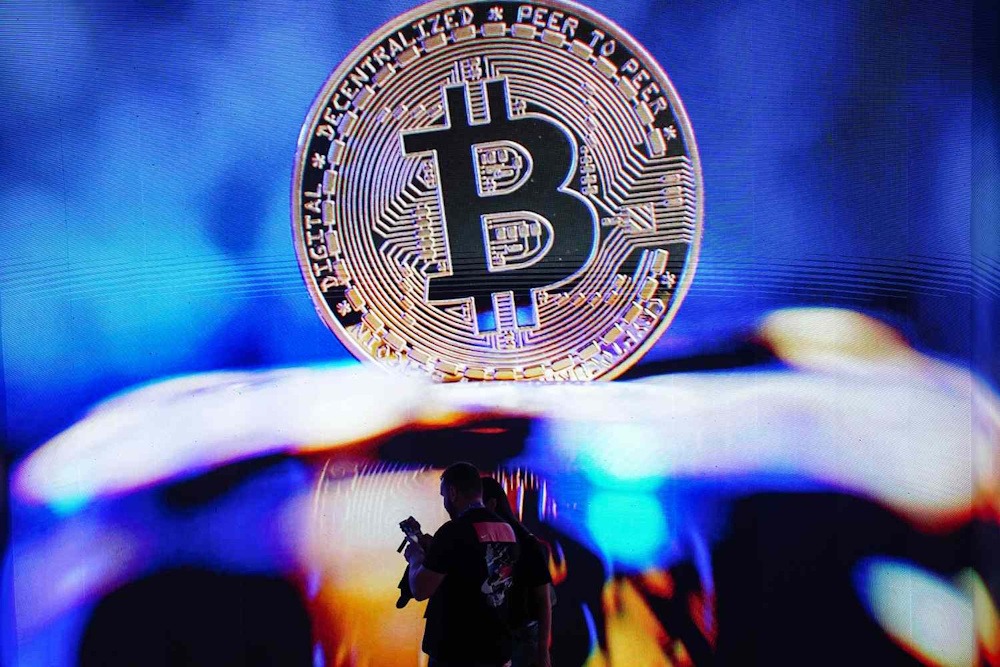
Bitcoin has pulled back to approximately $65,700 following a short-lived effort to surpass the $70,000 mark, with declining risk sentiment in U.S. equity markets impacting cryptocurrency valuations. Altcoins experienced a steeper decline compared to bitcoin, as significant tokens such as Solana and ether saw drops exceeding 6%. This downturn has wiped out their recent gains, even in the face of robust inflows into U.S. spot bitcoin ETFs. Macro headwinds from hotter-than-expected U.S. producer price data and rising concerns about job displacement, alongside shrinking USDT reserves on exchanges, have intensified worries about downside risk as bitcoin remains stuck in a $60,000 to $70,000 trading range. Bitcoin’s effort to retake the $70,000 mark earlier this week was short-lived, lasting approximately 48 hours. The largest cryptocurrency dipped to $65,735 during the early hours in Asia on Saturday, marking a 3% decline over the past 24 hours and a 2.8% drop for the week. Wednesday’s rally, which approached the $70,000 mark, has since retraced more than half of its gains as overall risk sentiment weakened during the U.S. sessions on Thursday and Friday.
Altcoins experienced a more significant decline. Solana experienced a decline of 6.7%, ether saw a decrease of 6.2%, dogecoin dropped by 5.1%, and XRP faced a loss of 4%. The losses have driven most major tokens into the red on a weekly basis, wiping out the altcoin outperformance that had been the week’s most promising indicator. BNB demonstrated resilience compared to its peers, experiencing a decline of only 2.5%. The trigger was recognizable. In Friday’s U.S. trading session, the S&P 500 ended down 0.4%, the Nasdaq 100 decreased by 0.3%, and the Dow Jones Industrial Average fell by 1.1%. Nvidia, continuing to process its post-earnings response, experienced a decline of 4.2%. A surprising 0.5% increase in producer prices has intensified concerns, indicating inflationary pressures that could prevent the Fed from lowering rates in the near future. Block Inc.’s significant layoffs have heightened concerns that AI is beginning to replace jobs throughout the economy, rather than solely generating new opportunities.
Crypto mirrored the decline in equities, but as is often the case, with a more pronounced impact. The S&P saw a 0.4% decline, which translated into a 3% decrease for bitcoin and over a 6% drop for altcoins. The leverage that re-entered the system during Wednesday’s rally was wiped out on the descent. This week, the institutional flow data revealed a surprisingly robust performance. In just three days, U.S. spot bitcoin ETFs have amassed $1.1 billion, positioning themselves for their strongest week in several months. However, ETF inflows have not been sufficient to counteract the prevailing macroeconomic challenges. “Over-analysis of short-term price movements is misguided,” stated Dom Harz. “Bitcoin’s volatility is expected, especially for early investors who have navigated past cycles.” What sets this moment apart is the nature of the capital fueling the rise of this emerging asset class.
In the latest analysis, data reveals that USDT stablecoin reserves on exchanges have decreased from $60 billion to $51.1 billion in the last two months. The firm cautioned that this decline could lead to a “massive sell-off” if reserves fall below the $50 billion mark. In other news, Strategy has emerged at the forefront of large U.S. companies with the highest short interest volume, as market participants grow increasingly skeptical about the viability of the firm’s debt-driven bitcoin acquisition strategy. On the Ethereum front, significant holders are beginning to offload their assets at a loss. The DAT company ETHZilla has officially shifted away from its ETH accumulation strategy, opting to rebrand and concentrate on tokenized real-world assets instead. Bitcoin has returned to the $60,000-$70,000 range, a zone it has remained in since the crash on February 5. Wednesday confirmed that the upper boundary of that range acts as resistance. The question as we approach March is whether the bottom remains intact.