
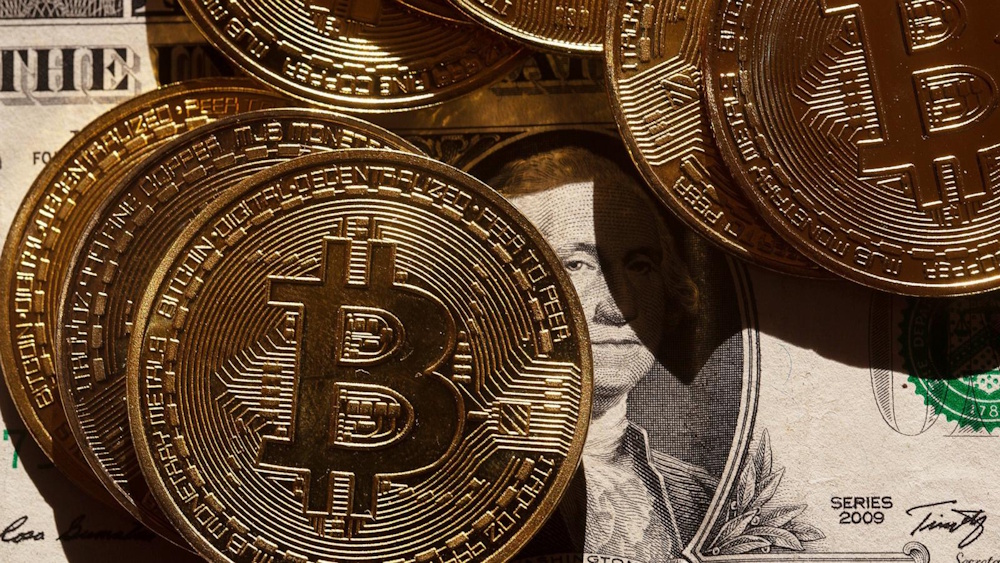
Bitcoin is currently trading around $93,000, with approximately $81 billion in transactions occurring over the last 24 hours. The price has increased by 3% today, currently sitting just 1% shy of the day’s peak at $93,929 and approximately 3% above the weekly low around $90,837. Nearly 19.96 million BTC are currently in circulation, approaching the established 21 million cap. The recent shift has propelled Bitcoin’s global market capitalization to $1.86 trillion, marking a 3% increase during the same timeframe. Analysts report that the Bitcoin price has momentarily fallen below its Metcalfe-based fair value for the first time since 2023, indicating what experts describe as a typical late-cycle reset. The decision was made amid a significant 36% decline that pushed Bitcoin’s price down to nearly $80,000 last week, eliminating excess leverage and clearing out speculative positions. Economist Timothy Peterson states that historically, when bitcoin trades below its fundamental network value, it has led to significant forward returns. According to the reports, twelve-month gains have averaged 132%, with positive performance occurring 96% of the time.
The internal dynamics of the network have also undergone a transformation. In a notable shift, long-term holders have amassed approximately 50,000 BTC in the last ten days, marking a reversal from months of consistent distribution. Coins are transitioning from short-term traders to long-term storage, which is alleviating sell pressure as bitcoin strives to regain higher levels. Bitcoin made a notable comeback, climbing back above $90,000 this week and reaching a peak of $93,978 on Wednesday. Macro conditions are currently aligning with on-chain signals. The Federal Reserve has officially concluded its Quantitative Tightening phase, and the markets are now anticipating a rate cut in December with a high degree of certainty. Historically, every QT reversal has aligned with significant bitcoin rallies. The trend originates from 2010, encompassing the dramatic cycle of 2013 and the post-2019 rally that ultimately propelled the bitcoin price to $67,000. Business-cycle indicators could be shifting as well. The copper-to-gold ratio, a key indicator for U.S. manufacturing sentiment and potential PMI strength, seems to be reaching a bottom.
Bitcoin’s recent stagnation, even in the face of expanding global liquidity, indicates that investors are responding more to a decline in economic confidence rather than to factors specific to the cryptocurrency market. A resurgence in risk appetite could potentially favor bitcoin following an extended period of consolidation. The short-term outlook continues to show signs of fragility. A bearish November close has confirmed a monthly MACD cross, a signal that frequently indicates multi-month periods of slower momentum ahead. Key levels around $85,000 and $84,000 remain strong support zones, but analysts caution that a breakdown could lead to a more significant test of $75,000. Bitcoin’s price continues to be significantly lower than its all-time high of $126,000 reached in October, although the volatility has calmed as liquidations decrease. Institutional participation shows a steady increase even amid the ongoing turbulence. BlackRock has ramped up its internal exposure to the IBIT ETF, while JPMorgan has rolled out a structured note linked to the product. Meanwhile, Strategy Inc. has broadened its bitcoin holdings and allocated a $1.4 billion reserve to instill confidence among investors that it won’t be compelled to sell. Earlier today, Charles Schwab announced its plans to introduce Bitcoin trading by early 2026.
In a significant shift from his previous stance, Larry Fink admitted earlier today that he was “wrong” about Bitcoin. During his address at the NYT DealBook Summit, Fink referred to Bitcoin as “an asset of fear,” indicating that it is acquired in periods marked by geopolitical tension, financial instability, or currency devaluation. He cautioned that it continues to be volatile and leveraged, but noted that it can serve as significant portfolio insurance. “If you’re buying it as a hedge against all your hope, then it has a meaningful impact on a portfolio… The other big problem of Bitcoin is it is still heavily influenced by leveraged players,” Fink said. BlackRock has launched significant crypto products and is developing tokenization technology, with Fink identifying a “large use case” for Bitcoin and digital assets. During the summit, Brian Armstrong, stated that there is “no chance” of the bitcoin price going to zero.